
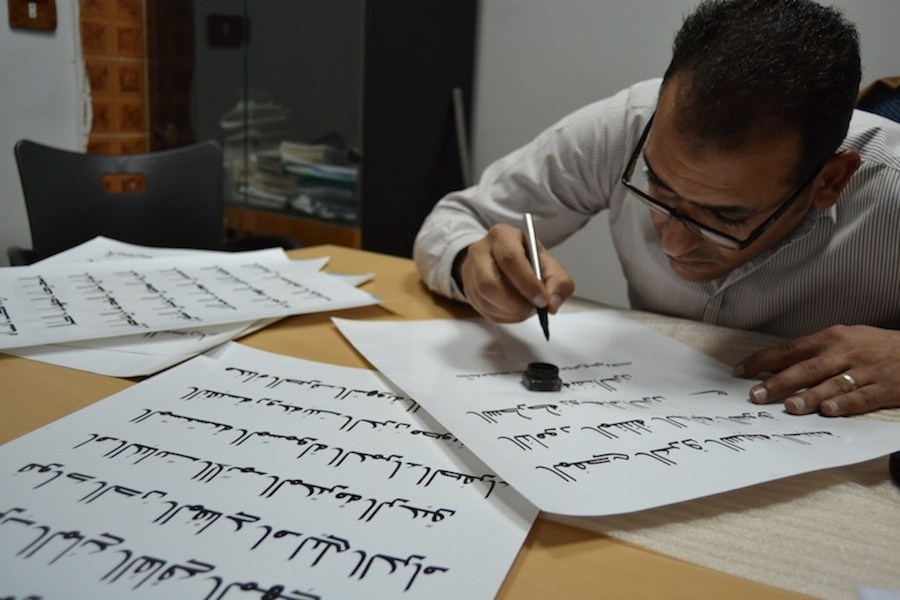
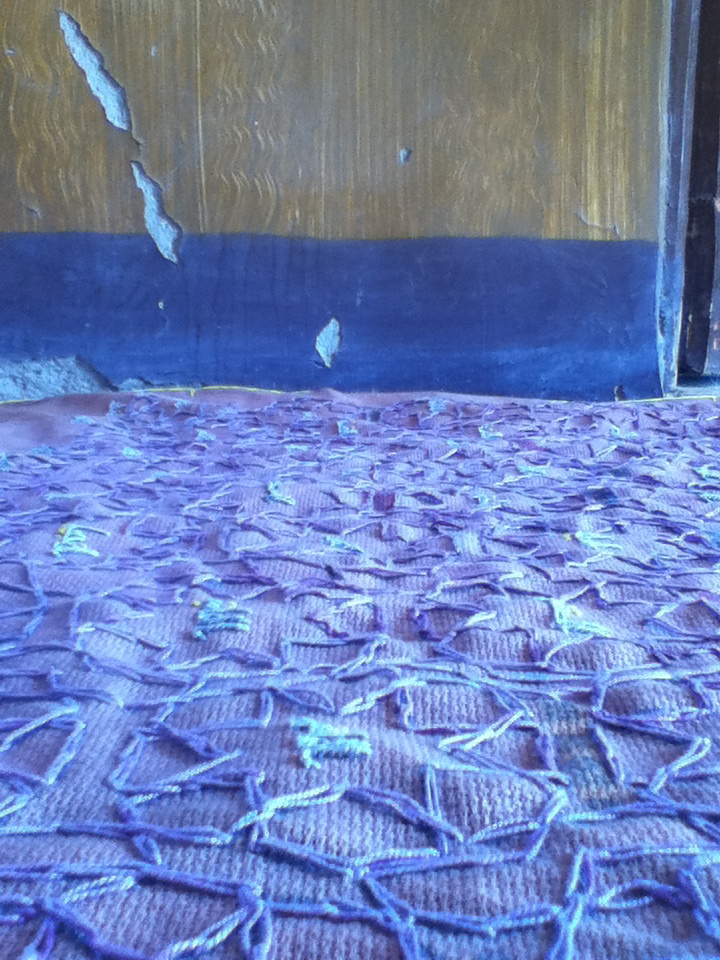
Abu Nuwas, a classical Arabic poet, once said “اثن عليها بآلائها وسمها بأحسن اسمائها” (Praise its blessings; and call it by its best names) while referring to wine, a recurring motif in Arabic poetry before and after the advent of Islam in 610 CE. A multimedia piece based on the poetry of wine, poetic forms of the pre-Islamic era, and their recurring themes of life and death, passage of time, intoxication and wakefulness, rebellion and sanctity. The project is based on a collaboration with Sufi women weavers in southern Egypt to produce tapestries that act as sites for resurrecting these poetic (mostly feminine) personifications of wine i.e. the figuration of a loss of consciousness that was once chronicled in oral literature and has since faded from everyday memory. The yarn and the tapestry are all dyed in wine and natural ingredients, and the calligraphy of the collected names is inspired by the earliest readable Arabic script.
By revisiting a selection of wine names and stories, the poetry evokes an allegorical state of drunkenness that has the ability to uncover selves and sensualities. Its poetic forms embody a ritual language with encoded verses. The project’s research was developed in collaboration with Mohammad Birairi, and especially builds on his valuable contributions to the symbol of wine in classical Arabic poetry. Based on Birairi’s readings, metonymic and metaphorical evocations of wine, wine drinking and wine drinkers are further observed.



 MENA EL SHAZLY